
Chapter one
My Story
Born in war, but not a product of war
You haven't come too far to look down. Ken Gines, head custodian at my high school
Where I come from
My family knew displacement long before I did. My grandfathers fled the Maruf District of Kandahar, where our name Barakzai comes from, because of the Anglo-Afghan wars. They became internally displaced in Farah, and in the 1980s my family moved to Kabul, the capital, hoping for better opportunities for their children.
I was born in Kabul, the youngest of eight children, and I am a first-generation college student. Some of my siblings live with disabilities from the war and the trauma it left behind.
My father and mother
My father served in the Afghan Army for 41 years. He was drafted in high school, and service was all he knew. He was eventually stationed in Kabul, which he was glad of, because he always wanted his children to have schools and a real education.
He survived explosions, land mines, and rocket attacks for a country that never gave him much back, not even his pension. At home, eight children were always waiting for him.
My mother cannot read or write. A rocket-propelled grenade once hit the balcony of our home and perforated her eardrums. Then, within a few days, she lost three of her brothers. It devastated her, but it never stopped her.
She raised all eight of us through the war, always afraid of losing one of us to being in the wrong place at the wrong time, or in the right place, but always at the wrong time. Explosions and bullets saw no one.
Still, she spoke up for widowed women in our community and helped start a bakery where those women could earn money to support their families.
Two windows
We lived in a small three-bedroom apartment. Our living room had two windows. Through one, I could see our neighbors watching Tom and Jerry and laughing until they cried. Through the other, I watched explosions, and I prayed for the people they hurt.
On my way through the city, I passed clay houses where children played with empty bullet cartridges as toys.
I never watched cartoons or played video games myself. For years we had no TV. When we finally did, I was the youngest, so I waited for my turn. And I was working, because my family needed every bit of help to put food on the table.

1
Popcorn on a bicycle
At nine, I went to work for a local store in Kabul, selling snacks to other kids so I could pay for science classes. I loaded the back of my bicycle with snacks and a tiny, traditional popcorn machine, and pedaled through the neighborhood to sell them.
I worked for the owner for eight months. He never paid me.

Blue tents and a glass of water
My first school, Aziz Afghan School, was a row of blue UNICEF tents. We sat on pebbles in the summer heat and learned to fear the iron rulers teachers used on the backs of our hands when homework went undone.
Our blackboard still had bullet holes in it. Often, a hole landed right in the middle of a math formula, because there was no space left to write it anywhere else. The board had to sit with its bullets, and we had to sit with our future.
I was afraid of those rulers, but I also wanted to succeed, and I wanted my teachers to believe in me. I became captain of the school, the student with the highest grades.
One day, I stared at my math teacher Ziya's glass of water and asked whether it was half full or half empty. He smiled and said, "You worry too much, Obaid. Just drink the damn water."
I have lived by that ever since: don't worry, do things.
2
The road to Amani
I skipped grades and earned a place at Amani Oberrealschule, a German high school and one of the best in the country. I was placed in the special talent classes taught only by German teachers, which you could join only by passing a demanding entrance exam across every subject: math, history, geography, sociology, biology, and more.
My father had an idea for my future. He wanted me to learn German. At the time, many young Afghans dreamed of going to the United States. My father thought I could try something different. If I learned German, I could eventually apply for a scholarship through the German Academic Exchange Service, DAAD, and possibly study at a German university. He thought I could be a big fish by choosing a different path.
I liked that idea. I wanted an education, and Germany seemed like a place where I might find one. I didn't know much about how international scholarships worked, or what it would take to study abroad, but I knew learning German was something I could do. So I did.
Amani sat among some of the most important places in Kabul: the presidential palace, the U.S. embassy, and Ariana Square, where the Taliban hanged President Najibullah. I passed that reminder of our history every day.
Some days, students were allowed to walk through the U.S. embassy grounds. I made friends with the Nepali and Indian doormen, spoke with them in Hindi, and sometimes they handed me a bottle of water or a snack on my way to or from school.
Most days, I took the other way, a hiking trail over the hills of Wazir Akbar Khan that had been bombed. Before I left, my mother made me a glass of Al-Otuor tea, handed me a UNICEF BP-5 biscuit, and prayed for my safe return.

At Amani, I studied alongside the children of warlords and was bullied for my old uniform and empty pockets. Some of them got in by bribing their way through admissions or leaning on their families' power in government. We all lived in Kabul, but in different worlds, with very different access to opportunity.
When an explosion hit near Zanbaq Square by our school, the German teachers left. I stayed. I had been learning German because I thought that was where my future might be. Suddenly, the teachers who had been preparing us for that future were gone.
I was still a child, trying to make decisions about my education in a country where even tomorrow was uncertain. I had no way of knowing which language would be useful, which scholarship might work, or which opportunity would disappear before I could reach it.
I had spent so much time preparing for Germany, and now I had to think about another possibility. At that age, I didn't know what worked and what didn't. I only knew I had to keep trying.
I became class president and school valedictorian, won a Kabul-wide math competition, and earned 17 medals in school academic competitions. I had the grades. But no future was waiting for me.
Teaching to pay for my dreams
To support myself, I taught. At Amani, I taught German to Mirwais Karzai, President Hamid Karzai's son. I taught German to a government minister's family, tutored many others, and taught school subjects at the Ariana Afghan Learning Center, where I had to stand on a chair so the whole class could see me.
I have always loved teaching, especially when, as a kid, it paid for my dreams.
3
The day that pushed me
When I was twelve, I was coming home from math classes at the Iqra Institute. Near Macroryan 3, I stopped at my older sister's house to pick up some things for my mother. Two of my best friends waited outside, buying phone cases from a street vendor.
Then the explosion happened. I lost them both.
I still carry that day. It taught me that I was young and I was poor, and that I had no other way forward but to keep pushing, and to get an education.
Why not me?
On our black-and-white Sharp TV, I watched President Hamid Karzai meet leaders from around the world. If he could travel, meet diplomats, and lead a country, why not me? But first, could I at least learn to read and write well? Everything about my future felt uncertain. Still, I knew the world was much bigger than my bubble.
My siblings and I saved for nine months, holiday money and wages from the jobs we worked as kids, to buy one black Dell computer for about $350. My siblings wanted to play Solitaire. I wanted the world. There were eight of us, so we made a schedule, and as the youngest, my turn was from 2 to 4 in the morning.
With Google Translate, I wrote one short email with the subject line "Help me achieve my dream!" It said: Hi, my name is Obaid, and I am from Afghanistan. I want to come and study in your program because I have no future here. I went on to tell them my life story.
For more than a year, I sent it to thousands of schools and programs around the world, asking for a full scholarship, because I could not pay. I was so desperate that I even sent it to barber shops and random stores in other countries.
One barber actually wrote back, wishing me good luck. I appreciated the kindness, but I couldn't help wondering what he expected me to do with that luck. Get a scholarship or a haircut? At that point, I would have happily accepted either.
Most of the others who wrote back said something like: "We do this and that. Sorry, we can't help you, but good luck." I was grateful they answered, but I hated that word. Luck. I had never felt it. What was it? What did it look like? Could I have it? Did I even have the right to it? Why should I care about luck at all?
Still, I hoped one person would write back. Could they see me as a person? Could they hear me? Or would I be just another number in a news story: an explosion in Kabul, 100 dead. Would I be one of the 100? Or the one of 100 who makes it?
First in hope
As the youngest, I always got the last portion of dinner, the last penny, the last of everything. But I was the first in hope.
I bought a black backpack, hoping it would carry me somewhere one day. My mother bargained the price down from 2,000 to 1,800 afghani. The seller said it was his last one, saved for his brother visiting from India. After a few small tears from me, it was mine.
I still carry that backpack. It has traveled the world with me. It feels like hope is attached to my back, pushing me to learn and serve.
4
The school that said yes
One program wrote back: GAKKO, at the Green School in Bali, Indonesia. I was fourteen. I went to the embassy by myself to apply for my visa, because no one I knew had ever done it.
On the day of my flight, the airport stopped me. My ticket had two layovers in India, at Indira Gandhi airport and then Kolkata, before Dubai and Bali, and I had no Indian visa. I did not know you needed one just to change planes there.
I called my father. "Son," he said, "you are young, and you don't know much. Come home and be safe. What are you doing out there?" No one really understood how badly I wanted to get out and learn.
Before going home, I decided to try one more time. I reached the program director, who booked me a new flight, straight from Kabul to Dubai and on to Bali.
In Bali, I learned to live on my own. I took a challenge to do something new every day for 30 days, and since my mother was not there to cook for me, I cooked 30 different chicken dishes in 30 days. I learned to make my own paper. I met a 103-year-old woman and took her very first selfie with her.
I have been raising myself for most of my life. Bali is also where I first tasted Heaven's Formosa oolong.


Five days to learn English
My first stop in America was Boston, for a summer of conflict resolution with Seeds of Peace.
Until then, I had spent years learning German. I had imagined studying in Germany, following my father's advice, and perhaps one day earning a DAAD scholarship. The United States had never been the plan I was preparing for.
But after the explosion near my school and the departure of our German teachers, I had to reconsider what my future might look like. Then an opportunity came that required English. I had spent so much time learning one language, only to find myself needing another.
They gave me five days to learn English. So I read seventeen books.
I didn't suddenly know everything about English in five days. But I had learned something from growing up in Afghanistan: sometimes you have very little time to prepare for a decision that could change your life.
I didn't know whether America would work out. I didn't know whether I would find a school, a scholarship, or a place where I could belong. I had already watched one possible future disappear. I didn't want to lose another because I was afraid to try.
I was still young, learning languages, finding opportunities, and making decisions without knowing where any of them would lead. Then a study abroad program brought me to the American International School of Utah.
5
Welcome home

At sixteen, I arrived in Utah with $2.67 in my pocket, almost no English, and everything I owned in that one black backpack.
A family was waiting at the airport to host me and give me a new home. They held a sign that said, "Welcome home, Obaid!"
Home turned out to be harder than the sign. I lived in their basement, and I learned that welcoming someone into a house is not the same as giving them a home.
My second host family had almost nothing, but they gave me what I had been searching for: a place to belong, a hundred dollars, and a small stone with one word on it. Gratitude.
Their program had a set time for how long they could host me, and when it ended, I came to live with my third family. Despite our different religions and ways of life, they have shown me gratitude, kindness, and love since the very first day.
At school, I was placed in ESL. I begged to join the other classes and learn alongside everyone else, and once again I felt like I did not belong. On the one day I missed school on purpose, I rode my bike almost two hours to pray Eid with people who prayed the way I did.
Zahir
On my first day of school, I met Zahir. His excitement for welcoming others and his kindness to strangers changed my life. Every time I visited, his family poured love on me with open arms. Whenever I felt alone, Zahir welcomed me into his home.
From high school until today, we have worn our traditional clothes side by side.


6
The vacuum, the paintbrush, and Ken
For more than two years, I was a janitor at my own school, earning $7.25 an hour and cleaning classrooms past midnight with my homework still in my bag. I could not afford tuition, and I barely had money to eat.
What scared me most was not my own hunger. It was my family. If I did not send money home, what would they eat? I was safe now, I told myself. It was okay if I didn't eat. I could not have both.
Our head custodian, Ken Gines, saw it on my face. One night he looked at me and said, "You haven't come too far to look down."
Then he made me a deal. "Obaid, lunch runs from 11:50 to 12:25. Eat. At 12:20, I'll hand you a spray bottle and a towel, you wipe down the cafeteria tables, and I'll pay you."
Every day after I cleaned, he shook my hand. There was always a $20 bill in it. "I am proud of you," he said. Ken also drove me to my ACT, because I had no ride.
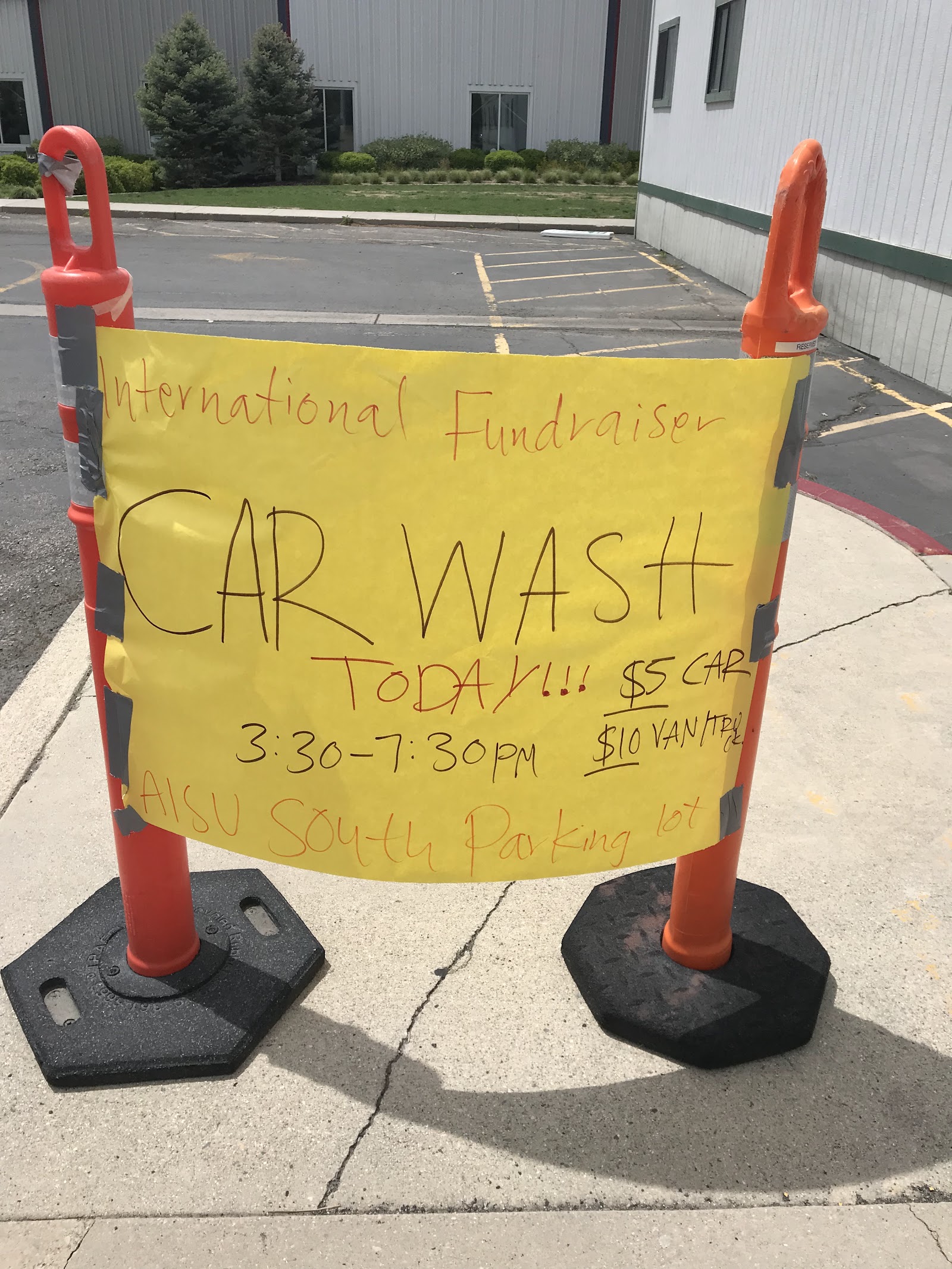
I painted the entire school, and I patched its walls. I washed cars to support myself. The day after my valedictorian speech, I was back at school with a paintbrush.


7
From ESL to valedictorian
The boy who was placed in ESL graduated two years later as valedictorian, with 24 honors. I became international student body president of my school, won DECA regional and state championships in business services marketing, and won a Model UN state championship, where I argued policy choices around the Rwandan genocide.
High school was also where I first found my voice on a stage. I spoke to students about bringing magic into education, and about leading a global life, especially for newcomers like me.
But one of the most important things I did at graduation had nothing to do with the awards. I included Ken in my valedictorian speech. I was the first at my high school to recognize a janitor in a valedictorian address. I wanted people to know who he was.
Students and teachers walked through the hallways every day, often without thinking about who cleaned them, who emptied the trash, or who stayed late to prepare the school for the next morning. I knew that work because I had done it. I had cleaned the same classrooms where I took my classes. I had wiped down the cafeteria tables where my classmates ate lunch. I had painted the walls and patched the holes.
People often overlook janitors. I didn't want Ken to be overlooked. He had done much more than help me earn a paycheck. He noticed when I was hungry. He found ways to help me without making me feel ashamed. He drove me to my ACT when I had no ride. And on nights when I was tired and worried about my family, he reminded me that I had already come too far to give up.
So when I stood in front of my classmates as valedictorian, I wanted to recognize the man who had stood beside me when I was cleaning their classrooms. Ken was there on graduation day.


In our last messages, a year later, he wrote: "You will be a great leader of people someday, and I'll be proud to say I know you." I told him I would always include his $20 handshakes in my story.
Ken died at fifty-six. I still carry his words into every room I walk into.
8
Staying close to home
I applied to many prestigious colleges and got in. I chose Westminster University in Utah, to stay close to the family and the community I had found.
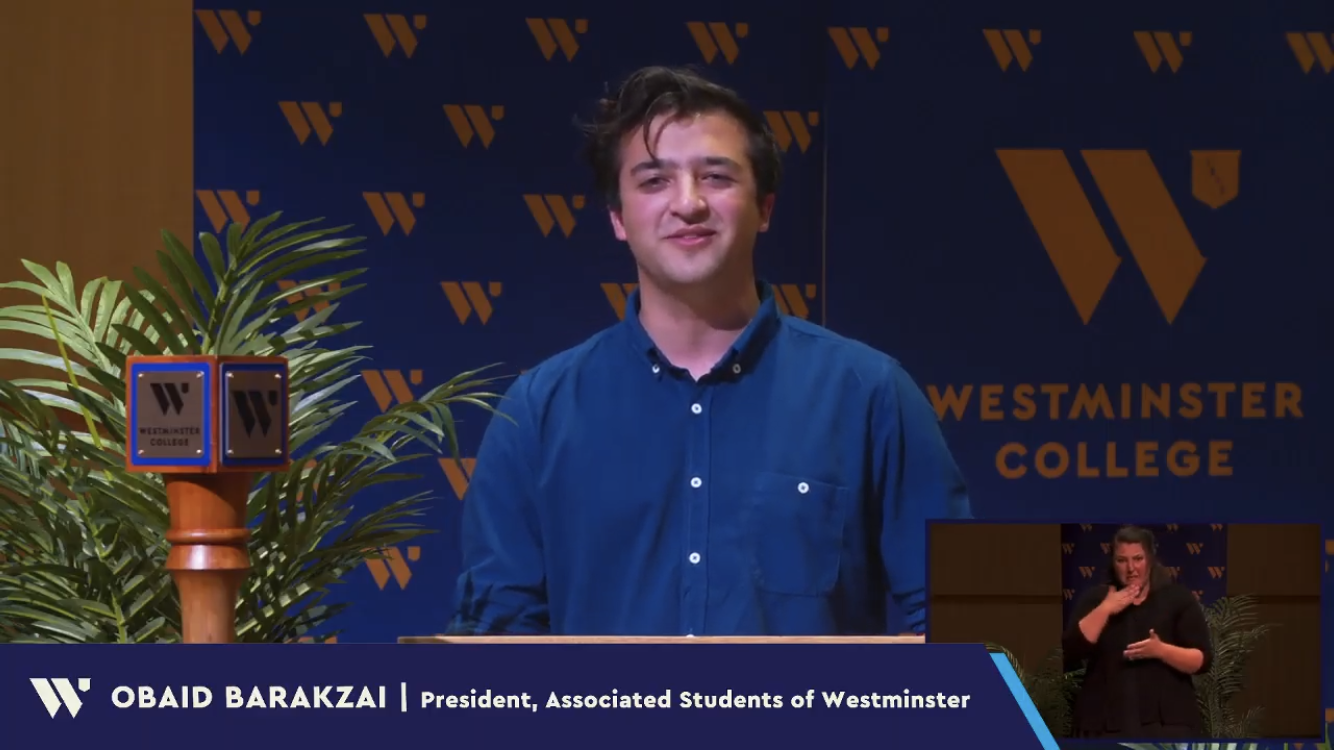
There, I designed my own major in international political economy, became Student Body President, graduated at the top of my class, and was selected as the 2022 commencement speaker. I received several leadership awards and academic cords recognizing my academic work and involvement in the university community.
I had come a long way from the boy who sat on pebbles in a UNICEF tent in Kabul, and from the teenager who struggled to understand English in an American classroom. But getting through college was not easy either. I drove for Uber and Lyft for more than a year to support myself. Sometimes it was a $3 tip. Every one counted.
I had chosen to stay in Utah because of the people who gave me a home. It was also where I began to see what I could do for others, especially young people who were trying to find opportunities in their own communities. And I fell in love with Utah's mountains and snow.


Finding my voice
I spoke at the United Nations and at Harvard. I sometimes think about how I once had five days to learn English, and how much my life has changed since then. I've shared some of my speeches on my YouTube channel, obaidtea. Speaking has become another way for me to share what I've learned, and the people and experiences that brought me here.
In April 2019, I organized the Globally Minded Peacemakers Conference at Westminster, on courageous pluralism, community service, and interfaith understanding.
With Postcards for Peace, I built art projects in refugee and immigrant schools, and with Seeds of Peace, I worked on conflict resolution and peacebuilding with young people across South Asia.
I started a small business, and I founded Teaplomacy. I also design websites as a freelancer, to help pay for school and to give back. I completed two post-bachelor's fellowships, one of them at Harvard, and led policy and community work at Promise Partnership Utah and Ignite Utah.
Through Teaplomacy, I wanted to create spaces where people could sit together, share their experiences, and learn from one another. A cup of tea had always meant something to me. I grew up with it in Afghanistan, where people gathered over tea to talk, listen, and spend time with family and friends. I wanted to bring some of that into the communities where I worked.
Over the years, my work has taken me into schools, local communities, government offices, and policy discussions. I've worked with data, conducted research, supported community partnerships, and helped people understand and participate in decisions that affect their lives.
I have also learned how much institutions matter. A school, a scholarship program, a government office, or even one person willing to help can make an enormous difference in someone's life. I know that because I have been on the receiving end of that help.


Since my first paycheck as a janitor, I have done my best to support my family. When I tell my parents what I have learned or achieved, they don't always understand it, and they don't question it. They just smile and are happy for me.
I have failed many times, too. Most of those failures I kept to myself. My parents have survived enough. I never wanted my struggles to become one more worry for them, so I tell them the good things, and sometimes the hard ones.
9
The one of 100
When I applied to graduate school, I was admitted to all nine programs I applied to: Harvard, Stanford, Columbia, Princeton, Georgetown, the University of Chicago, Tufts, Rice, and Johns Hopkins. Today, I live in New York City and study for my Master of International Affairs at Columbia, focused on international security, diplomacy, policy, and economics.
On November 13, 2025, I became a citizen of the United States. I celebrated on the steps of the Utah State Capitol, in the state that gave me a home, and I shared my story of immigration at the USCIS office in Utah.
In 2026, I moderated the debate for Utah's 1st Congressional District at Voices of the Next Majority, a Gen Z event, and spoke at the Voters of Tomorrow conference. On October 10, 2026, at the Harvard Club of New York City, I received the Alumni Impact Award and spoke about my work in civic engagement, policy, and research.


Utah is my second home. I love its mountains. They remind me of the ones behind me in that photo from Kabul, the ones I always wanted in the background. Climbing has been hard. The view has been worth it.
The boy who once asked whether he would be one of the 100 is now the one of 100 who made it. I did not get here alone, and I do not plan to stay here alone.
Be their Ken
A professor gave me a home after graduation and helped me move into my first apartment. Friends from Somalia, Colombia, and Syria carried me through my hardest years. Zahir and his family opened their door every time I needed it. And through it all, I felt the prayers of my family in Afghanistan.
That sign at the airport said "Welcome home." But a sign cannot give someone a home. People do.
Someday, you will meet someone who feels as out of place as I once did. Maybe their English is broken. Maybe they sit alone. Maybe they are afraid to ask for help. Be their Ken. You may never know what your kindness means to them.
To every immigrant still fighting for your place: keep going. You belong here too.
Invite me to share this story
At your school, conference, or community event, I would love to tell this story in person.
Invite me to speakWrite to me
A question, an idea, your own story, or just hello. I read every note, and I will write back.
Write to meChip in to my tip jar
If you enjoyed my story and feel even a little inspired, you can help me keep going.
Chip in
Thank you for reading. I am still a student in graduate school, and the costs are a lot for one person to carry. Every bit, big or small, helps me stay afloat and keep offering free mentorship and sessions to students who need them.
Venmo @obaidteaZelle: write to me, and I will send you my details.
Prefer another way? Write to me, and we will find what works best for you.
10